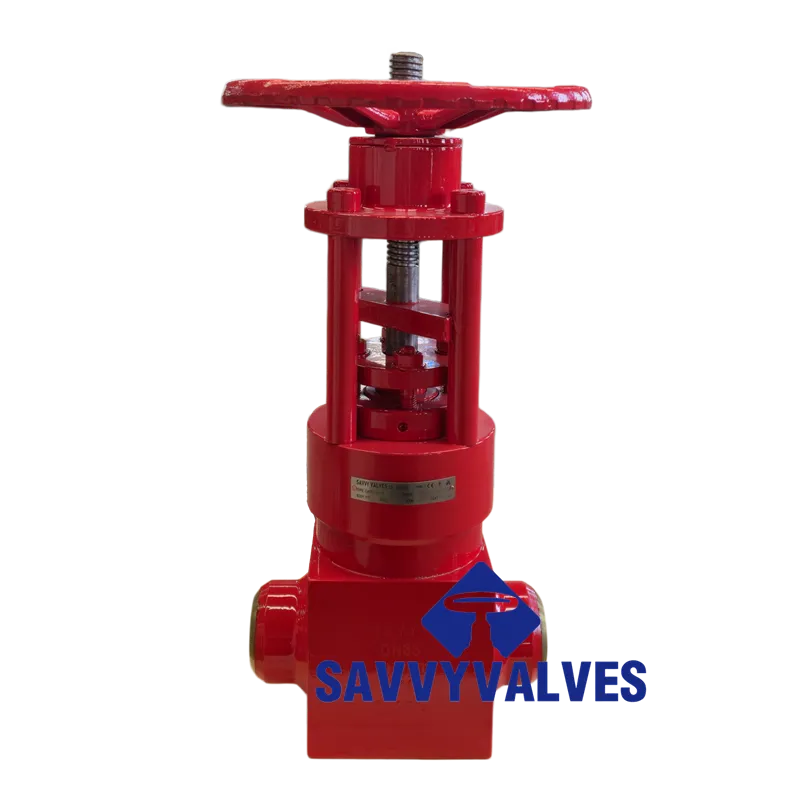
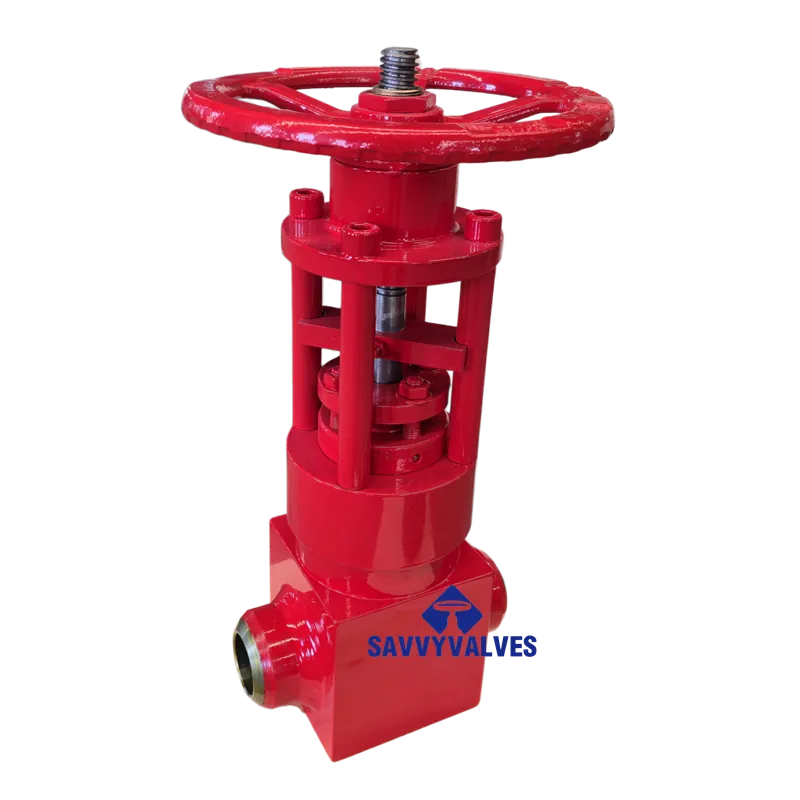
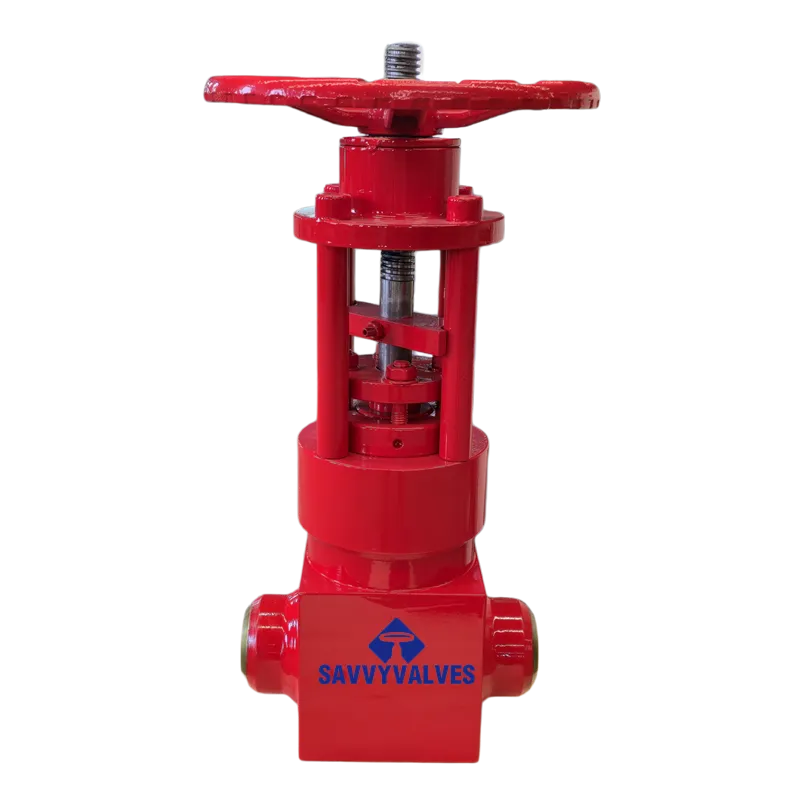
Description
Forged Steel Gate Valve Technical Data Sheet
(Free Forging Process / Welded Connection / ASTM A182 F11 Body / Pressure Self-Sealing Bonnet)
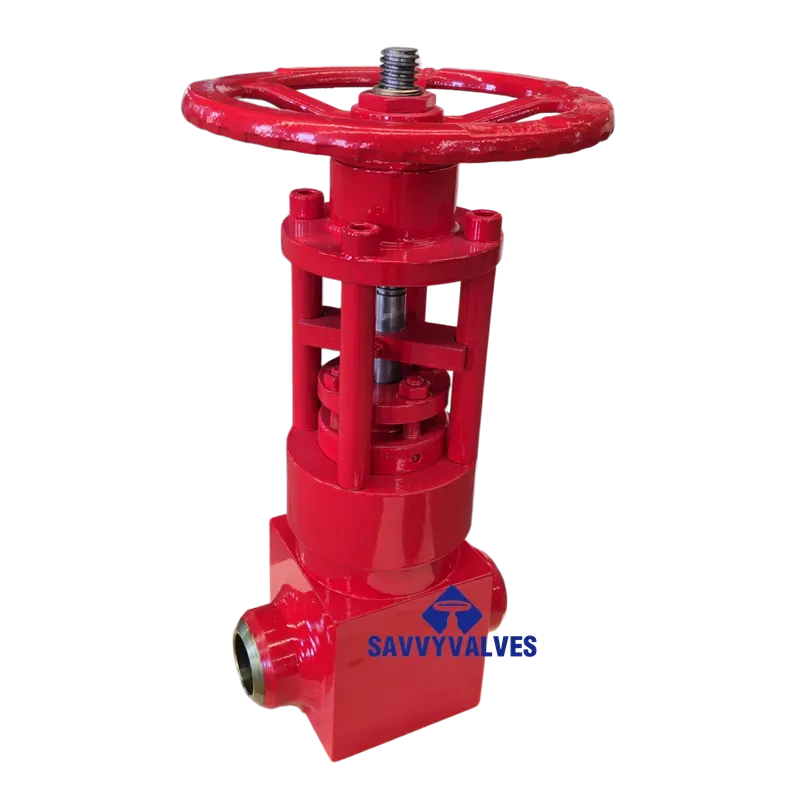
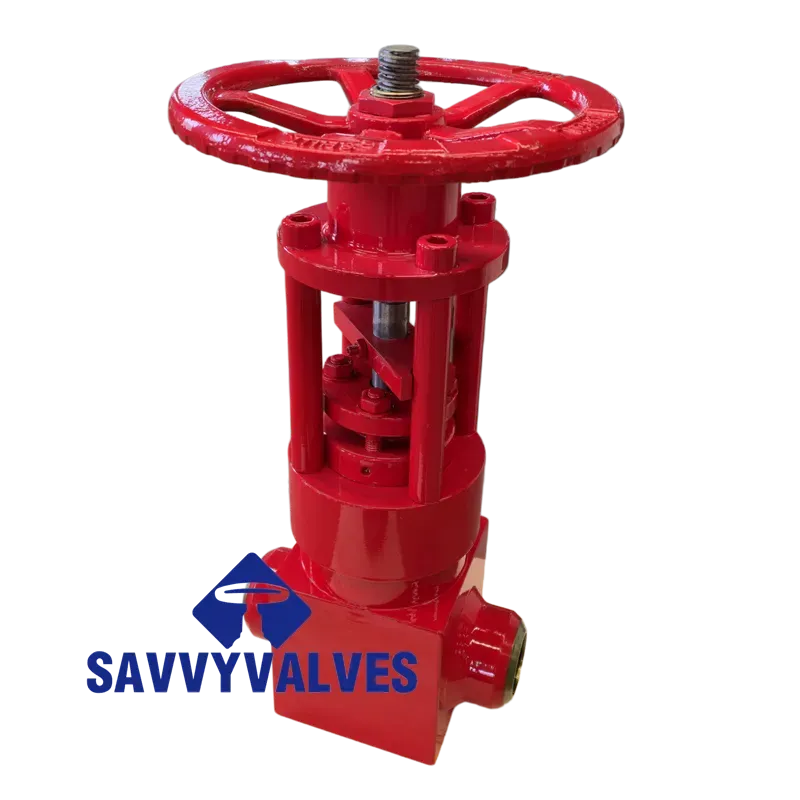
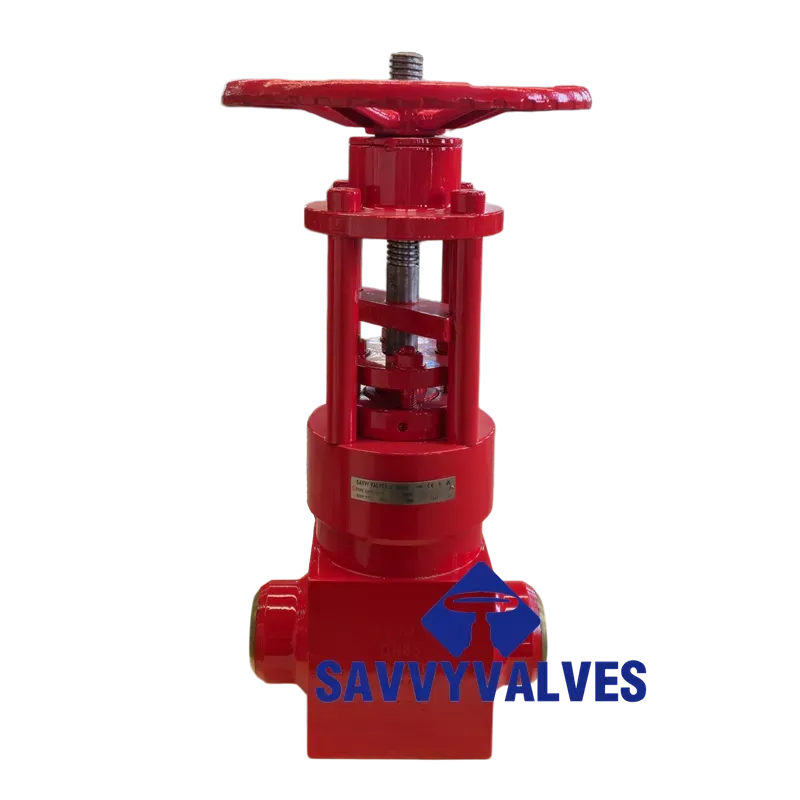
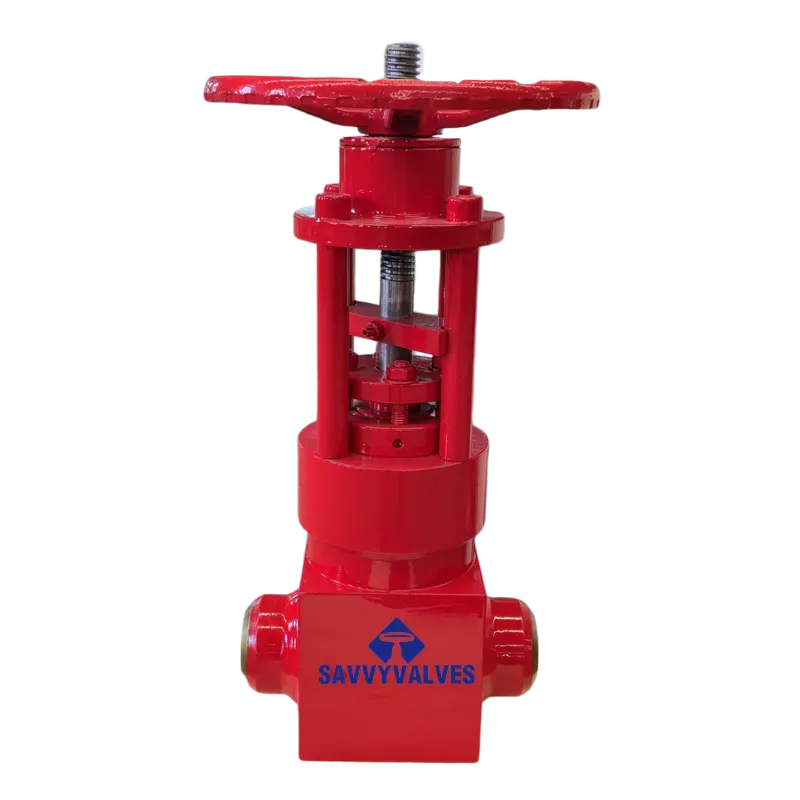
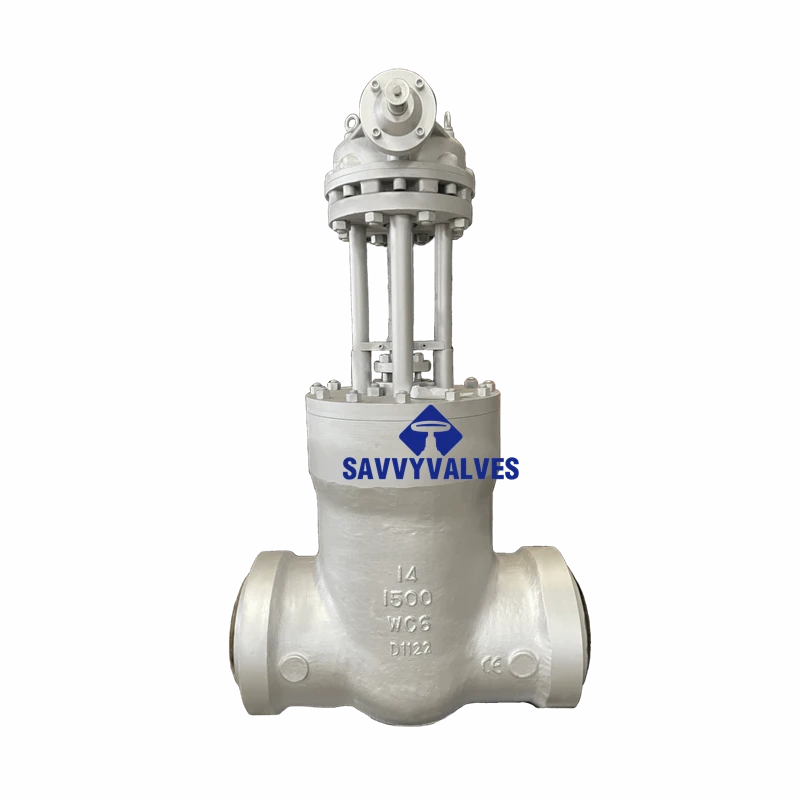
Product Name: Forged Steel Pressure Self-Sealing Bonnet Gate Valve (Welded Ends)
This valve features a free forging process for the body, ensuring superior grain structure and mechanical properties compared to castings. It is designed with a pressure self-sealing bonnet (pressure seal design) , where the sealing performance increases with internal pressure, making it ideal for high-pressure and high-temperature applications. The body material is ASTM A182 F11 (1.25% Chrome – 0.5% Molybdenum alloy steel) , offering excellent creep resistance and high-temperature strength. Connections are butt-weld ends (BW) per ASME B16.25, providing leak-free piping systems. Designed in accordance with API 602 et ASME B16.34.
|
Article |
Spécification |
|
Type de vanne |
Bolted Bonnet, Outside Screw and Yoke (OS&Y), Rising Stem Gate Valve |
|
Manufacturing Process |
Free Forging (Hot forged, solution annealed and grain refined) |
|
Bonnet Design |
Pressure Self-Sealing (Pressure Seal) – Threaded bonnet ring with sealing gasket |
|
Nominal Size (NPS) |
1/2″ ~ 2″ (DN15 ~ DN50) |
|
Classe de pression |
Class 1500 / Class 2500 / Class 4500 (Custom) |
|
Type de connexion |
Butt-Weld Ends (BW) conforming to ASME B16.25 |
|
Plage de température |
-29°C ~ +550°C (-20°F ~ +1022°F) |
|
Médias applicables |
High-pressure steam, Hot water, Oil & Gas, Power generation applications |
|
Norme de conception |
API 602 / ASME B16.34 / ISO 15761 |
|
Dimension face à face |
ASME B16.10 / API 602 |
|
Test de pression |
API 598 |
|
Part Name |
Material / Grade |
Material Properties & Application |
|
Corps |
ASTM A182 F11 (Class 2) |
1.25%Cr-0.5%Mo alloy steel. High tensile strength, excellent corrosion resistance and creep resistance at elevated temperatures. Suitable for high-pressure steam services . |
|
Bonnet |
ASTM A182 F11 |
Same material as body, ensures consistent thermal expansion and strength . |
|
Disc (Gate) |
ASTM A182 F6a (13% Cr) + Stellite Hardfacing / A182 F11 |
13% Chrome stainless steel with Stellite 6 hardfacing on sealing surfaces for erosion and wear resistance . |
|
Anneau de siège |
Integral with Body or Welded + Stellite Hardfacing |
Hardfaced with Stellite alloy, ground to mirror finish for metal-to-metal tight shut-off . |
|
Tige |
ASTM A182 F6a (13% Cr Stainless Steel) / A182 F304 |
High strength, corrosion resistant, blow-out proof design. Surface treated (nitriding/chrome plating) to reduce friction . |
|
Self-Sealing Gasket |
Stainless Steel + Flexible Graphite laminated / Pressure Seal Ring |
“Delta” or “Wedge” type ring. Pressure energizes the seal – higher pressure, tighter seal . |
|
Bonnet Ring |
ASTM A182 F11 / Carbon Steel |
Threaded ring that compresses the self-seal gasket. |
|
Emballage |
Flexible Graphite (Die-formed rings) |
High temperature resistance, low fugitive emission compliance (ISO 15848-1) . |
|
Gland Follower |
ASTM A182 F11 / Stainless Steel |
Precise compression of packing rings. |
|
Stem Nut |
Aluminum Bronze (C95400) / Ni-Resist |
Self-lubricating, prevents stem galling . |
|
Volant |
Fonte Ductile / Fabricated Steel |
Impact-resistant design. |
*Note: Final dimensions subject to approval drawings. Conforms to API 602 / ASME B16.10.*
|
NPS |
Size (inch) |
Face-to-Face L (mm) |
Body Bore (mm) |
BW End OD (mm) |
Approx. Height H (Open) (mm) |
Env. Poids (kg) |
|
1/2″ |
0.5 |
79 |
12.7 |
21.8 |
~158 |
~2.1 |
|
3/4″ |
0.75 |
92 |
19.1 |
27.2 |
~169 |
~2.3 |
|
1″ |
1.0 |
111 |
24.0 |
34.0 |
~197 |
~4.3 |
|
1-1/4″ |
1.25 |
120 |
31.8 |
42.8 |
~236 |
~5.9 |
|
1-1/2″ |
1.5 |
140 |
38.1 |
48.8 |
~283 |
~11.1 |
|
2″ |
2.0 |
178 |
50.8 |
61.4 |
~330 |
~15.2 |
Note: For Class 2500, dimensions vary. Please consult factory for specific drawings .
GARANTIE:
SAVVY VALVES s'engage à fournir une qualité de produit exceptionnelle et un service après-vente sans souci. Nos vannes sont garanties pour une durée de vie minimale de 12 mois, pendant laquelle nous fournirons gratuitement toutes les pièces de rechange nécessaires et les instructions de maintenance détaillées. Pendant la période de garantie, si des dommages non provoqués par l'homme se produisent, nous remplacerons les composants sans frais et fournirons une assistance technique professionnelle. Une fois la garantie expirée, les clients ne doivent payer que le coût des pièces de rechange, tout en bénéficiant de services de maintenance à prix réduit. Notre objectif est d'aider nos clients à réduire leurs coûts opérationnels et à améliorer l'efficacité de leur production grâce à une qualité fiable et à un service après-vente complet. Qu'il s'agisse de demandes techniques ou de besoins de maintenance, notre équipe d'experts répondra rapidement pour garantir que votre système de vannes maintient des performances optimales à tout moment.




 French
 English