


Description
FICHE TECHNIQUE
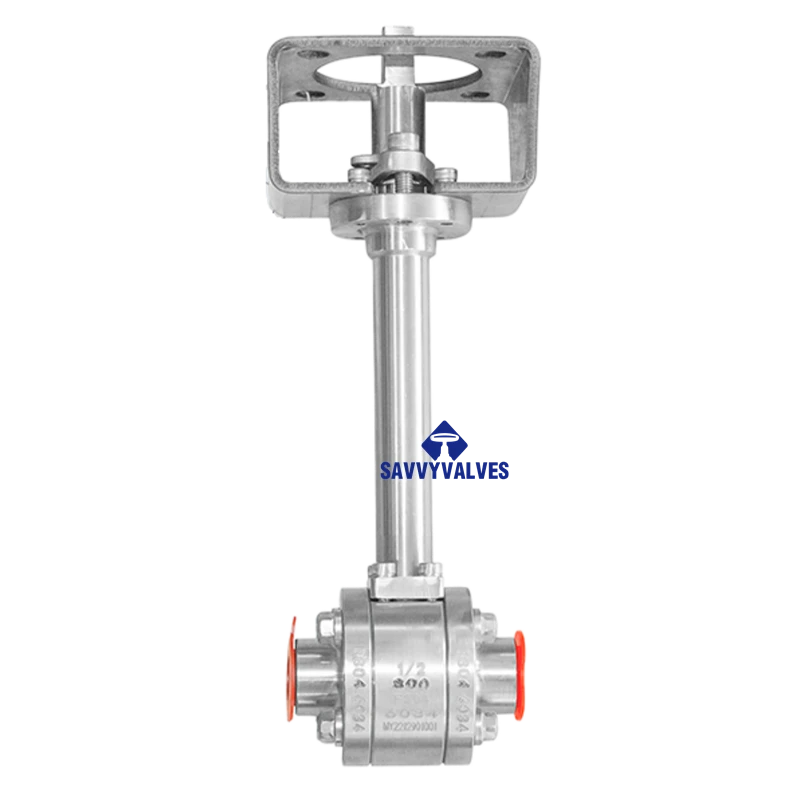
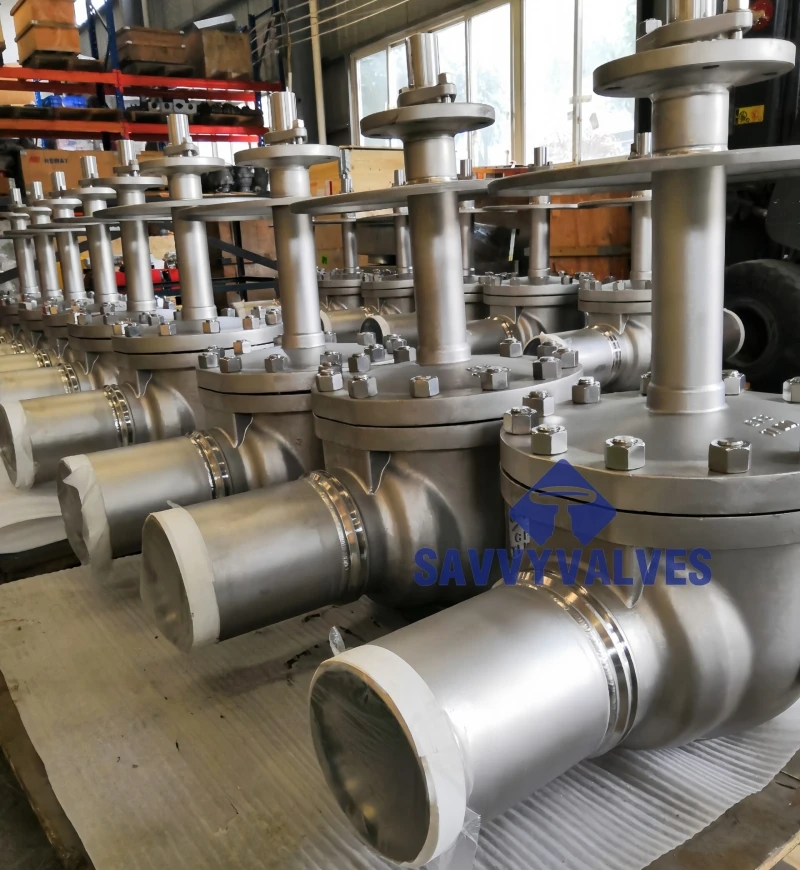
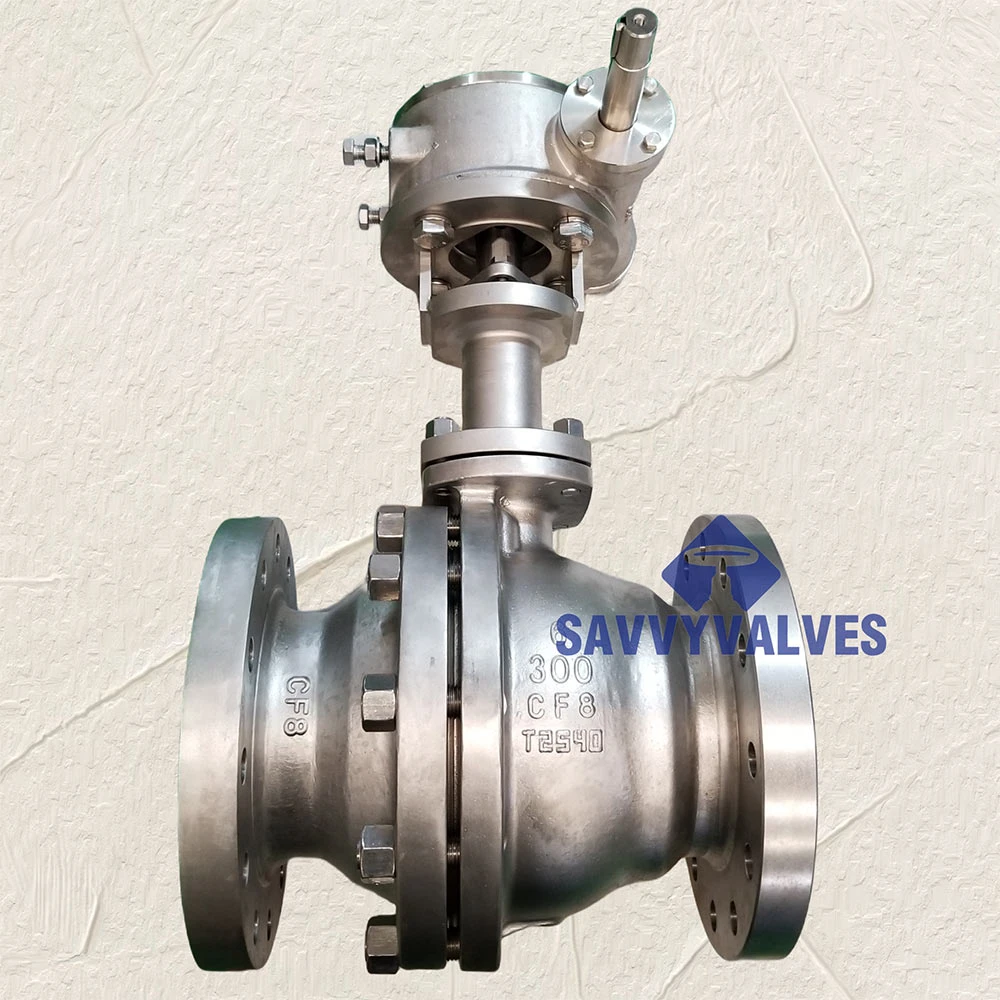
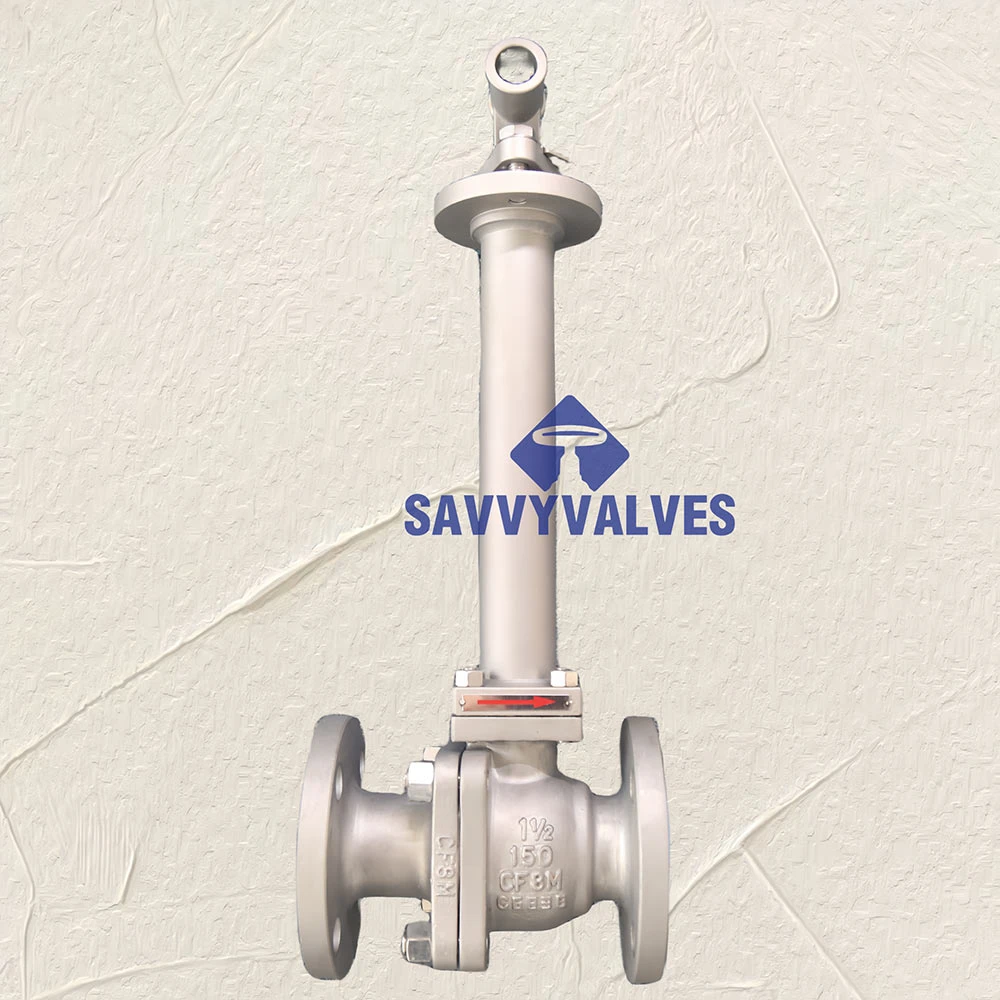
Cryogenic Floating Ball Valve (2-Piece, Flanged Ends, Stainless Steel)
|
Article |
Spécification |
|
Type de vanne |
Floating Ball Valve, 2-Piece Split Body, Side-Entry, Anti-Static, Anti-Blowout Stem |
|
Gamme de tailles |
DN15 – DN300 (½” to 12″) |
|
Pression nominale |
Class 150 / 300 / 600 (PN16 – PN100) |
|
Terminer la connexion |
Flanged Ends (Raised Face / RTJ) per ASME B16.5 |
|
Norme de conception |
BS 6364 / ISO 28921-1 / MSS SP-134 / ASME B16.34 / API 6D |
|
Face to Face Standard |
ASME B16.10 / ISO 5752 / BS 6364 Table 1 |
|
Test Standard |
API 598 / API 6D / BS 6364 |
|
Service |
LNG, LO2, LN2, LAr, Ethylene, Methane, Cryogenic Industrial Gases |
|
Plage de température |
-196°C to +80°C (-320°F to +176°F) |
|
Type d'alésage |
Full Bore / Reduced Bore (Specify) |
|
Part Name |
Qty. |
Matériel |
Material Specification / Notes |
|
Body Halves |
2 |
Stainless Steel |
ASTM A182 F304/F304L (Forged) or ASTM A351 CF8/CF3 (Cast) |
|
Balle |
1 |
Stainless Steel |
ASTM A182 F304/F316 (Forged), Chrome Plated / Surface Ra ≤ 0.4µm |
|
Tige |
1 |
Stainless Steel |
ASTM A182 F304/F316, Anti-Blowout Design |
|
Seat (Downstream) |
1 |
PCTFE / RPTFE |
Spring-Energized PCTFE (Preferred for -196℃) or Glass-Filled RPTFE |
|
Seat (Upstream) |
1 |
PCTFE / RPTFE |
Optional Bidirectional Design |
|
Stem Seals / Packing |
Set |
PTFE + Graphite |
Live-Loaded Packing (Belleville Springs) at Ambient Zone |
|
Body Gasket |
2 |
PTFE / Spiral Wound |
PTFE or SS+Graphite Spiral Wound |
|
Body Bolts & Nuts |
Set |
Stainless Steel |
ASTM A193 B8M (Bolts) / ASTM A194 8M (Nuts) |
|
Thrust Washer / Bearing |
1 |
PTFE / Reinforced PTFE |
Reduces operating torque |
|
Dispositif antistatique |
1 |
Stainless Steel |
Ball-to-Stem / Stem-to-Body |
|
Stop / Locking Device |
1 |
Stainless Steel |
Optional for safety |
|
Name Plate |
1 |
Stainless Steel |
MSS SP-25 marking |
|
Composant |
Matériel |
Rationale |
|
Corps et Bonnet |
A182 F304/F316 / A351 CF8/CF8M |
Austenitic stainless steel retains ductility and impact toughness at -196°C. F304L/CF3 grades offer enhanced resistance to intergranular corrosion after welding. All components undergo cryogenic stabilization treatment per BS 6364 . |
|
Balle |
A182 F304/F316 |
Hard chrome plating or electroless nickel coating improves surface hardness (Ra ≤ 0.4µm) and ensures low friction against PCTFE seat . |
|
Siège |
PCTFE (Spring-Energized) |
PCTFE (Poly-chloro-tri-fluoro-ethylene) maintains dimensional stability and resilience at -196°C. Spring-energized design ensures bubble-tight shut-off even at low differential pressures . |
|
Joints de tige |
PTFE + Graphite |
Extended bonnet positions packing away from cold zone; live-loading compensates for thermal cycles and prevents fugitive emissions . |
|
Fonctionnalité |
Description |
Benefit |
|
Extended Bonnet |
Length per BS 6364 (e.g., 250mm for DN50) keeps stem packing at ambient temperature . |
Prevents ice formation on packing; ensures reliable stem sealing and operation. |
|
Pressure Relief Hole |
Upstream-side hole in ball prevents cavity pressure buildup during warm-up . |
Eliminates risk of cavity over-pressurization and seat damage. |
|
Dispositif antistatique |
Springs/plungers ensure electrical continuity between ball, stem, and body . |
Prevents static charge accumulation in flammable cryogenic services. |
|
Blowout-Proof Stem |
Stem retained internally by shoulder or retaining ring . |
Safety critical: prevents stem ejection under pressure. |
|
Cryogenic Treatment |
All pressure-containing parts thermally cycled to -196°C . |
Stabilizes microstructure; ensures dimensional stability in service. |
*Note: Dimensions vary by manufacturer, pressure class, and extension length. Below are typical values based on ASME B16.10 / BS 6364 .*
|
Taille |
Face-à-face (L) |
Extension Length (E) |
Height Open (H) |
Handwheel Dia. (D) |
Bolt Circle Dia. |
No. of Holes |
|
DN15 (½”) |
108 millimètres |
180 mm |
210 mm |
100 mm |
60.5 mm (2.38″) |
4 |
|
DN25 (1″) |
127 mm |
200 mm |
240 mm |
125 millimètres |
79.4 mm (3.12″) |
4 |
|
DN50 (2″) |
178 mm |
250 mm |
310 mm |
200 mm |
120.7 mm (4.75″) |
4 |
|
DN80 (3″) |
203 mm |
280 mm |
370 mm |
250 mm |
152.4 mm (6.00″) |
4 |
|
DN100 (4″) |
229 mm |
320 mm |
440 mm |
315 mm |
190.5 mm (7.50″) |
8 |
|
DN150 (6″) |
394 mm |
400 mm |
570 mm |
400 mm |
241.3 mm (9.50″) |
8 |
|
DN200 (8″) |
457 mm |
450 mm |
680 mm |
500 mm |
298.5 mm (11.75″) |
8 |
Flange Details: Raised Face (RF) per ASME B16.5. For RTJ (Ring Type Joint) or BW (Butt Weld) ends, specify separately .
|
Test |
Medium |
Pressure / Condition |
Critères d'acceptation |
|
Shell (Body) Test |
Water / Nitrogen |
1.5 x Rated Pressure @ Ambient |
No visible leakage |
|
Seat (Seal) Test |
Air / Nitrogen |
1.1 x Rated Pressure @ Ambient |
ISO 5208 Class VI (Bubble-tight) |
|
Cryogenic Seat Test |
Liquid Nitrogen |
@ -196°C, 1.1 x Rated Pressure |
≤ 0.1 Nm³/hr (He) per BS 6364 Annex A |
|
Low Pressure Seat Test |
Air |
0.6 MPa (87 psi) |
Bubble-tight |
|
Stem Leakage Test |
Helium |
@ Ambient |
ISO 15848-1 Class B (≤10⁻⁵ mbar·L/s) |
|
Cavity Relief Test |
– |
Verify ball hole functions |
Pressure relief to upstream side |
Typical Test Pressures (Class 300 Example):
|
Taille |
Torque @ Ambient (Nm) |
Torque @ -196°C (Nm) |
Recommended Operator |
|
DN15 (½”) |
8 |
12 |
Levier |
|
DN25 (1″) |
15 |
22 |
Levier |
|
DN50 (2″) |
45 |
68 |
Lever / Gear |
|
DN80 (3″) |
90 |
135 |
Gear |
|
DN100 (4″) |
160 |
240 |
Gear |
|
DN150 (6″) |
350 |
525 |
Gear / Actuator |
|
DN200 (8″) |
600 |
900 |
Gear / Actuator |
Note: Torque values increase at cryogenic temperatures due to material contraction and seal compression . For actuated valves, specify pneumatic/electric/hydraulic actuator separately .
|
Taille |
Flow Coefficient Cv (US gal/min) |
Kv (m³/h) |
|
DN15 (½”) |
8 – 12 |
7 – 10 |
|
DN25 (1″) |
30 – 40 |
26 – 35 |
|
DN50 (2″) |
120 – 150 |
104 – 130 |
|
DN80 (3″) |
280 – 320 |
242 – 277 |
|
DN100 (4″) |
480 – 550 |
415 – 476 |
|
DN150 (6″) |
1,100 – 1,300 |
952 – 1,125 |
|
DN200 (8″) |
2,000 – 2,300 |
1,730 – 1,990 |
*Note: Reduced bore valves have lower Cv values (typically 60-80% of full bore).*
|
Exigence |
Spécification |
|
Oxygen Service Cleaning |
If service is LOX or oxygen-enriched, valve must be cleaned and packaged per CGA G-4.1 with special packaging to maintain cleanliness . |
|
Material Traceability |
Full traceability per EN 10204 Type 3.1 required for all pressure-containing parts . |
|
Impact Testing |
Charpy V-Notch impact tests at -196°C per ASTM A370 (minimum 41J average) . |
|
Tests PMI |
100% Positive Material Identification verification for all alloy components . |
|
Cryogenic Cycle Testing |
Optional: 200+ thermal cycles between ambient and -196°C to validate long-term performance. |
|
Vacuum Jacket Compatibility |
Extended bonnet length must match insulation thickness for cold box applications. |
Procurement Notes
This technical data sheet complies with BS 6364, ASME B16.34, and API 6D requirements for cryogenic floating ball valves
GARANTIE:
SAVVY VALVES s'engage à fournir une qualité de produit exceptionnelle et un service après-vente sans souci. Nos vannes sont garanties pour une durée de vie minimale de 12 mois, pendant laquelle nous fournirons gratuitement toutes les pièces de rechange nécessaires et les instructions de maintenance détaillées. Pendant la période de garantie, si des dommages non provoqués par l'homme se produisent, nous remplacerons les composants sans frais et fournirons une assistance technique professionnelle. Une fois la garantie expirée, les clients ne doivent payer que le coût des pièces de rechange, tout en bénéficiant de services de maintenance à prix réduit. Notre objectif est d'aider nos clients à réduire leurs coûts opérationnels et à améliorer l'efficacité de leur production grâce à une qualité fiable et à un service après-vente complet. Qu'il s'agisse de demandes techniques ou de besoins de maintenance, notre équipe d'experts répondra rapidement pour garantir que votre système de vannes maintient des performances optimales à tout moment.






 French
 English